Uma Jenkins · 27 September 2026
Analyzing Battery Storage Synergies with Solar Systems in High-Altitude Off-Grid Locations
High-altitude off-grid locations present unique conditions for solar energy systems combined with battery storage, where thinner air and extreme temperature swings affect both generation and energy retention, yet data from multiple installations shows measurable performance gains when components operate in tandem. Researchers track how lithium-ion and other battery chemistries interact with photovoltaic arrays at elevations above 3,000 meters, noting that daily solar irradiance often exceeds lowland averages while nighttime temperatures drop sharply enough to reduce battery round-trip efficiency by 10 to 15 percent in unheated enclosures.
Environmental Factors at Elevation
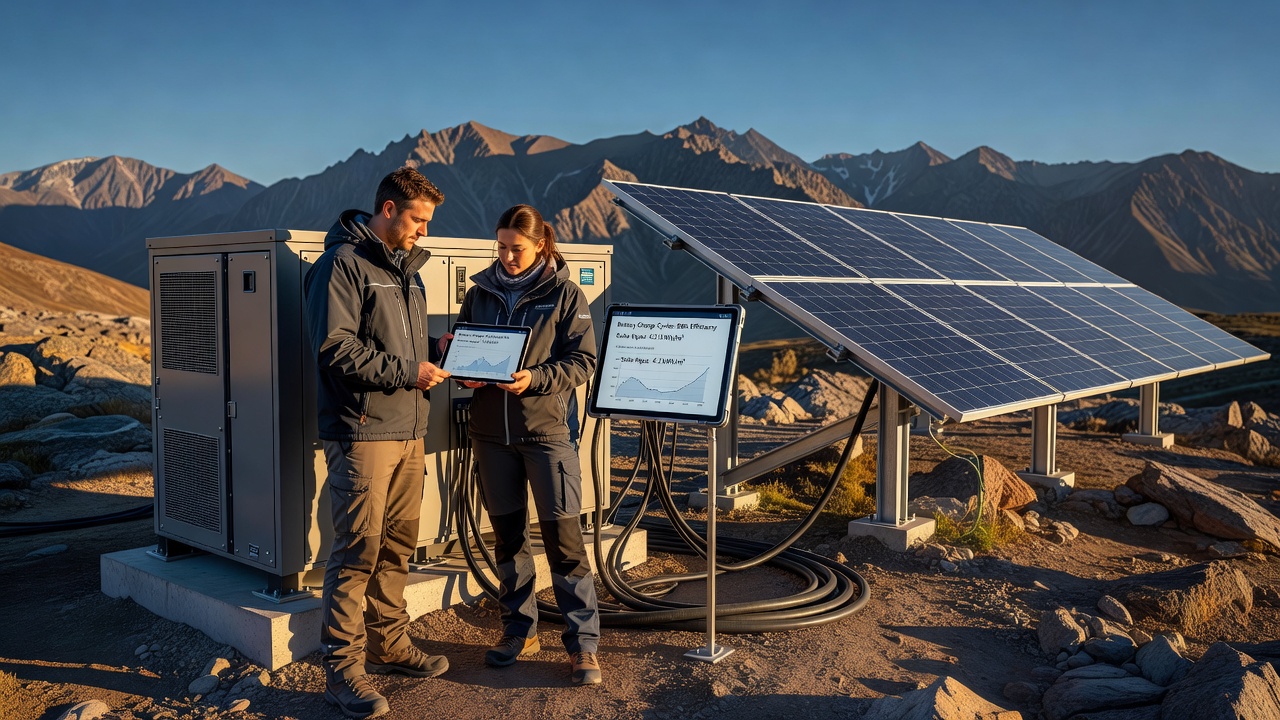
Atmospheric pressure decreases with altitude, which alters inverter cooling rates and can increase switching losses in power electronics, but engineers compensate by selecting components rated for wider operating ranges. Snow accumulation and high ultraviolet exposure add mechanical stress to panels, while cold temperatures improve photovoltaic output by raising voltage yet simultaneously slow ion movement inside batteries. Studies conducted in the Andes and the Colorado Rockies indicate that pairing oversized arrays with thermally managed batteries offsets these losses, because excess daytime production charges storage before temperatures fall below freezing.
Performance Data and System Interactions
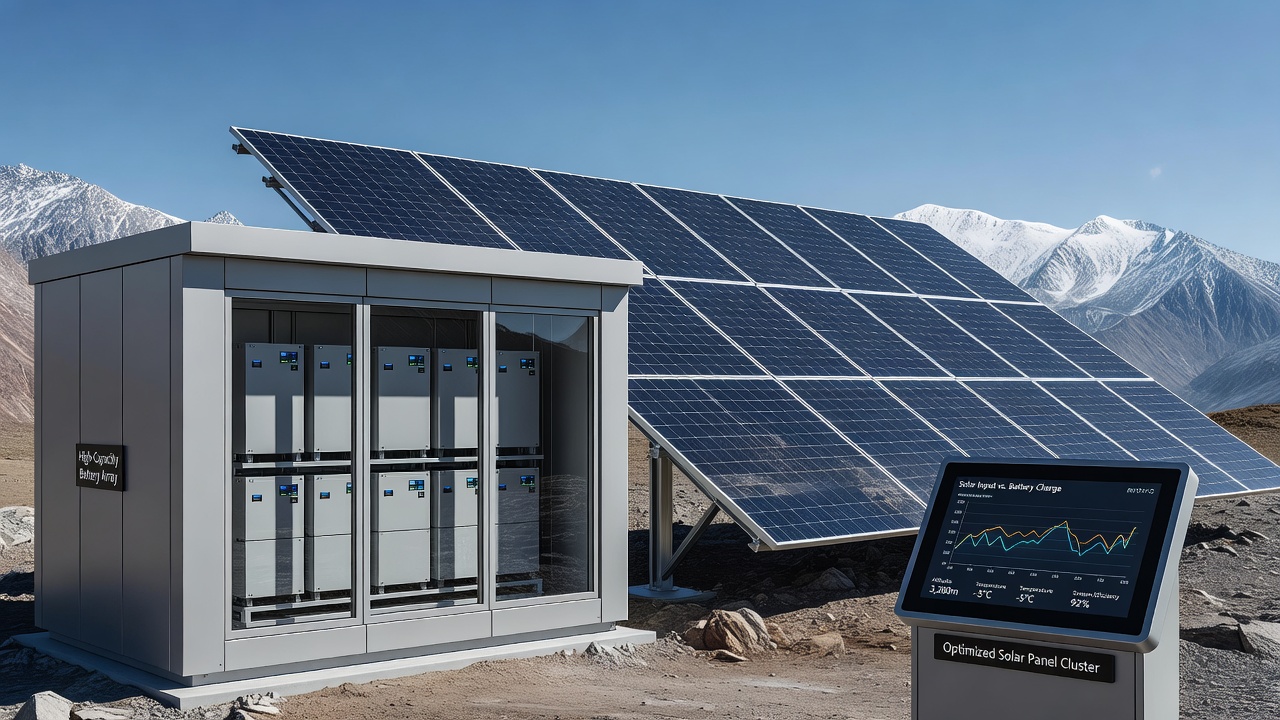
Figures from long-term monitoring programs reveal that hybrid setups in high-altitude sites achieve capacity factors between 22 and 28 percent annually when batteries shift energy across diurnal cycles. One installation in the Peruvian highlands recorded a 19 percent increase in usable energy after adding 48-volt lithium-iron-phosphate packs sized at 1.2 times daily load, because the batteries absorbed midday peaks and supplied power through extended evening hours. Temperature compensation circuits inside battery management systems prove critical; without them, charge acceptance drops noticeably once ambient readings reach minus 15 degrees Celsius.
Observers note that synergies emerge most clearly during shoulder seasons, when solar input fluctuates with passing cloud banks yet batteries maintain stable voltage to critical loads. Data loggers capture how state-of-charge limits set at 20 to 80 percent extend cycle life beyond 4,000 equivalents despite frequent partial cycling. Research groups in Canada and Australia continue to publish comparative datasets showing that ventilated battery shelters reduce thermal derating by roughly 8 percent compared with sealed units.
Case Examples from Operational Sites
Take one remote research station in the Himalayas where a 12-kilowatt array feeds a 40-kilowatt-hour battery bank; operators report that the system covers 94 percent of annual demand without diesel backup after the second year of operation. Similar patterns appear in the Sierra Nevada, where utility-scale pilots integrate flow batteries chosen for their tolerance to sub-zero temperatures and modular scaling. These examples illustrate how site-specific sizing tools now incorporate altitude-corrected irradiance models and temperature-adjusted battery curves rather than generic lowland assumptions.
September 2026 Milestones and Ongoing Research
Multiple agencies plan data releases and system upgrades timed for September 2026, including expanded sensor networks at existing test beds in both North America and Central Asia. These updates will provide granular statistics on degradation rates under combined stressors of ultraviolet exposure, thermal cycling, and partial state-of-charge operation. Industry reports from organizations such as NREL and the International Renewable Energy Agency already outline standardized test protocols that future datasets will follow.
Design Considerations and Component Selection
System designers prioritize batteries with integrated heating elements or phase-change materials when overnight lows fall below manufacturer thresholds. Inverter selection also shifts toward units with wider MPPT voltage windows to accommodate the higher open-circuit voltages produced by cold modules. Cabling runs require derating for reduced air density, and grounding schemes account for higher lightning risk at exposed ridges. Observers tracking multiple sites report that total system costs per kilowatt-hour delivered drop measurably once annual production exceeds 1,600 kilowatt-hours per installed kilowatt of array capacity.
Conclusion
Analysis of battery storage paired with solar in high-altitude off-grid environments continues to rely on accumulating field data rather than generalized models, because altitude introduces simultaneous gains in irradiance and losses in thermal performance. Continued monitoring through 2026 and beyond will refine sizing methodologies and component specifications for these specialized applications.