Felix Lang · 13 September 2026
Exploring Solar Efficiency Patterns in Mountain Communities Through Real Data Analysis
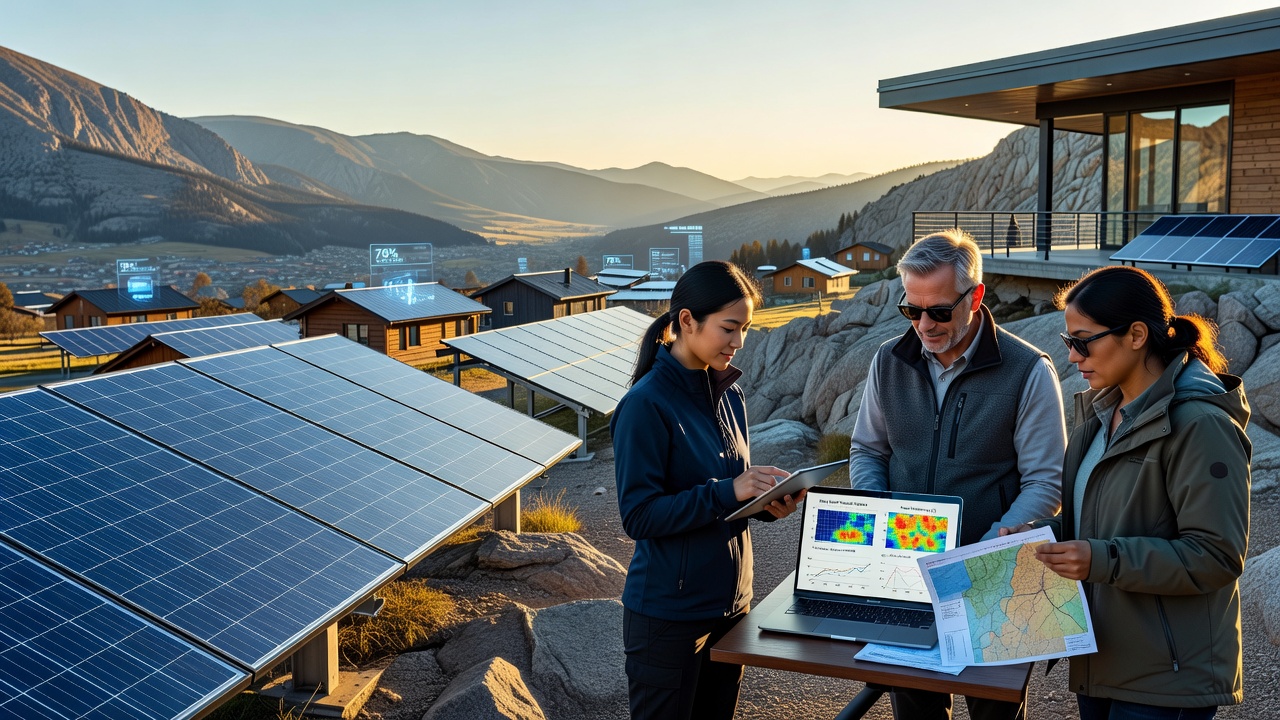
Researchers examining solar performance in elevated regions have compiled extensive datasets from monitoring stations across the Rockies, the Alps, and the Andes. These records reveal how altitude, temperature swings, and seasonal snow cover interact with photovoltaic output in measurable ways. Data collected over multiple years shows consistent patterns that differ markedly from lowland installations, and analysts continue to refine models that account for these variables.
Data Sources and Collection Methods
Monitoring networks in mountain communities rely on pyranometers, temperature sensors, and inverter logs that transmit readings at fifteen-minute intervals. Studies from institutions like the National Renewable Energy Laboratory have aggregated information from sites above 2,000 meters, where direct normal irradiance often exceeds values recorded at sea level by fifteen to twenty-five percent. Yet cloud formation patterns and aerosol levels introduce variability that requires statistical smoothing before efficiency calculations proceed. Teams cross-reference satellite imagery with ground measurements to isolate local effects such as valley fog or ridge-top wind exposure.
Altitude and Irradiance Interactions
Higher elevations receive stronger solar radiation because the atmosphere thins and scatters less light. Real-time datasets from Colorado communities at 2,500 meters demonstrate peak irradiance values reaching 1,100 watts per square meter during summer afternoons, compared with 850 watts per square meter at 500 meters. Temperature coefficients also shift efficiency curves. Panels lose roughly 0.4 percent output per degree Celsius above 25 degrees, yet colder mountain nights allow modules to cool rapidly and regain some of that lost capacity. Observers note that these opposing factors produce net gains only when snow reflection adds diffuse light during shoulder seasons.
Seasonal Snow and Albedo Effects
Winter snow accumulation creates a temporary boost through increased albedo, reflecting up to eighty percent of incoming light onto tilted arrays. Analysis of Swiss alpine villages shows production spikes of twelve to eighteen percent in March and April when fresh snow blankets south-facing slopes. However, heavy accumulation on panels themselves reduces output until manual or automated clearing occurs. Data loggers installed in Canadian mountain towns have recorded multi-day outages when storms deposit thirty centimeters or more, highlighting the need for predictive maintenance schedules based on weather forecasts.

Comparative Case Studies Across Regions
Communities in the Sierra Nevada have shared five years of inverter data that researchers normalized against local weather stations. Output per installed kilowatt averaged 1,450 kilowatt-hours annually, exceeding the statewide average by nine percent. In contrast, similar systems in the Austrian Alps delivered 1,380 kilowatt-hours per kilowatt after accounting for frequent morning cloud cover. Analysts adjusted for system age and inverter efficiency, revealing that elevation alone accounted for roughly sixty percent of the performance difference. These findings align with reports from the Australian Renewable Energy Agency on high-country installations in New South Wales, where thinner air and clearer skies produced comparable gains despite lower overall insolation at those latitudes.
Analytical Tools and Modeling Approaches
Machine learning models trained on mountain datasets now incorporate variables such as slope angle, azimuth, and hourly snow depth. Regression analyses indicate that a ten-degree increase in tilt can offset losses from partial shading caused by neighboring ridges. Software packages used by utilities integrate real-time satellite snow-cover maps to forecast daily generation within three percent accuracy. Engineers at research centers continue to test hybrid physical and statistical models that adjust for aerosol events from nearby wildfires, events that have grown more frequent in recent seasons.
Projected Developments Through 2026
Updated monitoring arrays scheduled for deployment in September 2026 will expand coverage to additional high-elevation sites in the Himalayas and the Pacific Northwest. Preliminary simulations suggest these new stations will provide finer resolution on microclimate effects that current networks average out. Industry groups expect the resulting datasets to improve yield predictions for community-scale projects planned in similar terrain, allowing planners to size storage systems more precisely. Continued refinement of albedo algorithms should reduce uncertainty around shoulder-season gains that currently vary by more than ten percent between adjacent valleys.
Conclusion
Long-term records from mountain communities demonstrate that solar arrays can achieve higher specific yields than equivalent lowland systems when snow reflection, temperature advantages, and irradiance gains align. Yet operational challenges tied to access, weather extremes, and variable cloud patterns require site-specific analysis rather than generalized assumptions. Ongoing data collection and model updates will continue to clarify these patterns, supporting more accurate planning for future installations in comparable environments.